
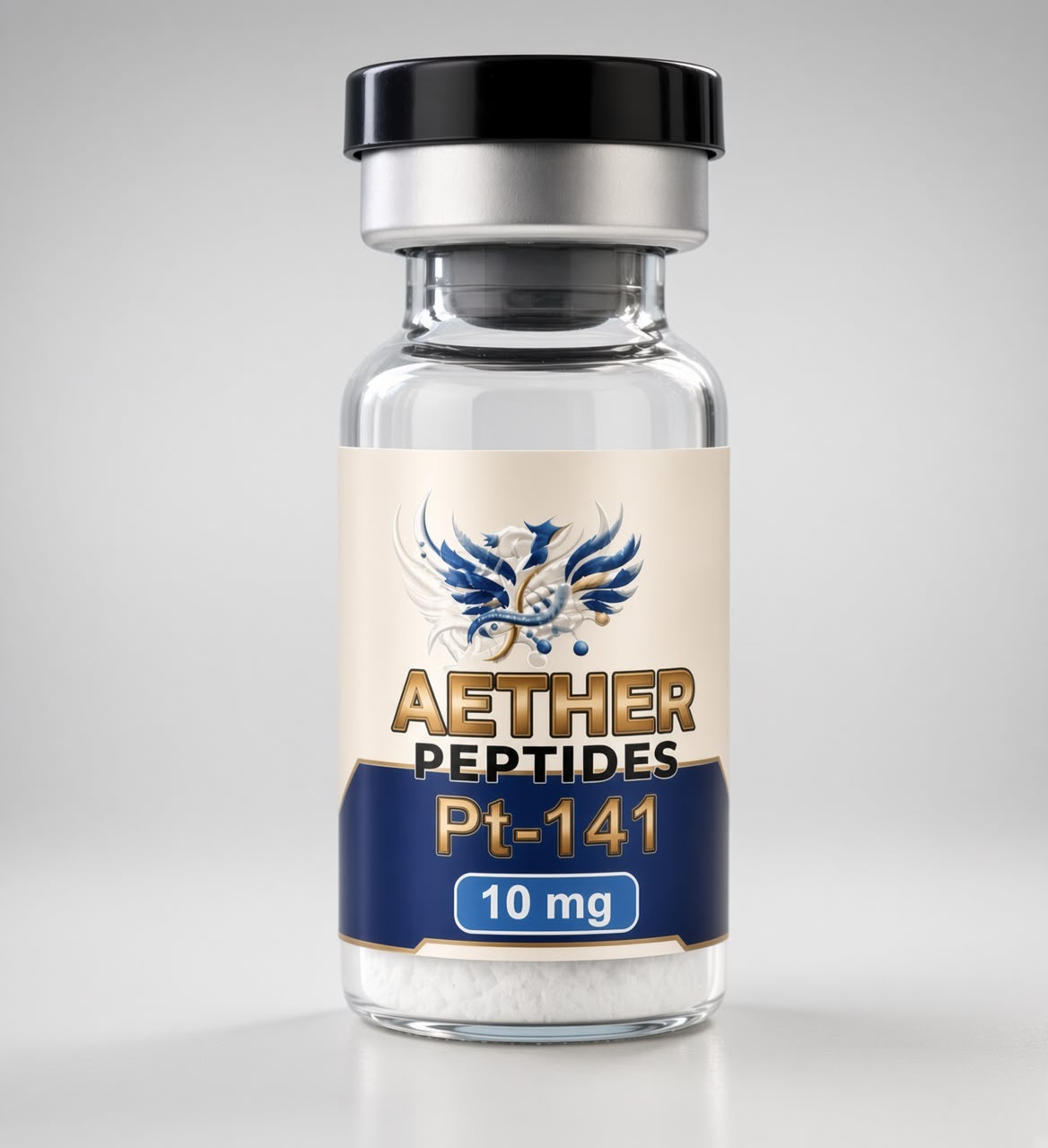
Melanotan II 10mg

Melanotan II 10mg

Melanotan II is a synthetic cyclic analogue of the α-MSH pharmacophore. Its structure is commonly described as Ac-Nle⁴-Asp⁵-His⁶-D-Phe⁷-Arg⁸-Trp⁹-Lys¹⁰-α-MSH(4–10)-NH₂. It was developed as a potent melanotropic compound and subsequently became an important experimental tool for studying melanocortin receptors.

Unlike Melanotan I, MT-II is relatively non-selective, which is important when interpreting its effects. Its activity at MC1R is associated with melanogenesis, while activity at MC4R and other melanocortin receptors contributes to effects involving appetite, energy balance and sexual function.

Research of Melanotan II (MT-II) 10mg

Principal receptors of interest: MC1R, MC3R, MC4R and MC5R

Structure of Melanotan II (MT-II) 10mg

Principal receptors of interest: MC1R, MC3R, MC4R and MC5R

Mechanism and Action of Melanotan II (MT-II) 10mg

The central mechanism is melanocortin-receptor agonism. When MT-II activates melanocortin receptors, these G-protein-coupled receptors can stimulate intracellular signaling pathways including adenylyl cyclase/cAMP signaling. The biological result depends strongly on which receptor and tissue are involved.

Melanotan II (MT-II) 10mg and Obesity

There is a strong mechanistic connection between MT-II and obesity research. The POMC–melanocortin system is one of the body’s major neural systems for regulating appetite and energy expenditure. POMC-derived melanocortins activate MC3R/MC4R, with MC4R being particularly important for body-weight regulation. T-II is useful experimentally because it activates MC4R. Proposed pathway MT-II → MC4R activation → hypothalamic melanocortin signaling → reduced food intake + altered energy expenditure → potential reduction in body weight Animal studies have demonstrated that MT-II can suppress food intake, and its effects can be blocked by melanocortin antagonists, supporting the involvement of MC4R. his makes MT-II scientifically related to newer MC4R-targeted obesity drugs. However, there is an important distinction: Melanotan II is an experimental non-selective melanocortin agonist, not an established obesity treatment. Modern obesity drug development has focused on more selective and clinically characterized MC4R agonists because non-selective melanocortin activation can produce unwanted effects.

Melanotan II (MT-II) 10mg and Cardiac Disease

The relationship with cardiovascular disease is also primarily mechanistic and experimental. MC4R signaling participates in the interaction between obesity, sympathetic nervous-system activity and blood pressure. Activation of central melanocortin pathways can influence cardiovascular physiology, including sympathetic activity and arterial pressure. MC3R/MC4R — metabolic regulation MC3R and MC4R are highly represented in the CNS and form an important component of the melanocortin system controlling energy balance. Dysfunction of this pathway is strongly associated with obesity. MC4R — sexual function MT-II is particularly notable because melanocortin signaling can also influence sexual behavior and erection. Human experimental studies found that MT-II could initiate erections and increase sexual desire, although nausea, yawning and other adverse effects were also observed. This relationship is not evidence that MT-II treats cardiovascular disease. In fact, cardiovascular effects are one reason non-selective melanocortin agonists require caution in research. Experimental studies have reported changes in blood pressure with melanocortin agonism, particularly with prolonged exposure. herefore, MT-II is better described as a research probe for melanocortin/cardiometabolic biology rather than a cardiovascular therapeutic.

Melanotan II (MT-II) 10mg and Joints

he connection with joint disease is somewhat more indirect but scientifically interesting. Melanocortin signaling, particularly MC1R signaling, has been investigated as an endogenous anti-inflammatory/pro-resolving pathway. α-MSH and related melanocortin compounds can influence inflammatory signaling pathways and inflammatory cytokine production. MC1R is expressed in several immune and tissue cell types, providing a potential mechanism for regulating inflammation. This has led researchers to investigate selective MC1R agonists in inflammatory diseases, including experimental arthritis. For example, the MC1R-selective agonist PL8177 has demonstrated anti-inflammatory and pro-resolving effects in experimental arthritis models. This does not mean PL8177 and MT-II are the same compound; rather, it demonstrates the therapeutic research potential of the MC1R pathway. Conceptual relationship Melanocortin agonism → MC1R → anti-inflammatory signaling → reduction/resolution of inflammatory processes → potential relevance to arthritis/joint disease Thus, MT-II has a shared receptor-pathway relationship with research into inflammatory joint disease, but substantially less direct evidence exists for MT-II itself as a treatment for arthritis.

Disclaimer: The products mentioned are not intended for human or animal consumption. Research chemicals are intended solely for laboratory experimentation and/or in-vitro testing. Bodily introduction of any sort is strictly prohibited by law. All purchases are limited to licensed researchers and/or qualified professionals. All information shared in this article is for educational purposes only.

References

  1. Ng, F. M., Sun, J., Sharma, L., Libinaka, R., Jiang, W. J., & Gianello, R. (2000). Metabolic studies of a synthetic lipolytic domain (AOD 9604) of human growth hormone. Hormone research, 53(6), 274–278. https://doi.org/10.1159/000053183
  2. Cox, H. D., Smeal, S. J., Hughes, C. M., Cox, J. E., & Eichner, D. (2015). Detection and in vitro metabolism of AOD 9604. Drug testing and analysis, 7(1), 31–38. https://doi.org/10.1002/dta.1715
  3. Ng, F. M., Jiang, W. J., Gianello, R., Pitt, S., & Roupas, P. (2000). Molecular and cellular actions of a structural domain of human growth hormone (AOD9401) on lipid metabolism in Zucker fatty rats. Journal of molecular endocrinology, 25(3), 287-298.
  4. Heffernan, M. A., Thorburn, A. W., Fam, B., Summers, R., Conway-Campbell, B., Waters, M. J., & Ng, F. M. (2001). Increase of fat oxidation and weight loss in obese mice caused by chronic treatment with human growth hormone or a modified C-terminal fragment. International journal of obesity and related metabolic disorders : journal of the International Association for the Study of Obesity, 25(10), 1442–1449. https://doi.org/10.1038/sj.ijo.0801740
  5. Ng, F. M., Sun, J., Sharma, L., Libinaka, R., Jiang, W. J., & Gianello, R. (2000). Metabolic studies of a synthetic lipolytic domain (AOD9604) of human growth hormone. Hormone research, 53(6), 274–278. https://doi.org/10.1159/000053183
  6. Kopchick, J. J., Berryman, D. E., Puri, V., Lee, K. Y., & Jorgensen, J. O. (2020). The effects of growth hormone on adipose tissue: old observations, new mechanisms. Nature Reviews Endocrinology, 16(3), 135-146.
  7. Heffernan, M., Summers, R. J., Thorburn, A., Ogru, E., Gianello, R., Jiang, W. J., & Ng, F. M. (2001). The Effects of Human GH and Its Lipolytic Fragment (AOD9604) on Lipid Metabolism Following Chronic Treatment in Obese Mice andβ 3-AR Knock-Out Mice. Endocrinology, 142(12), 5182-5189.
  8. Bray, G. A., & Greenway, F. L. (2007). Pharmacological treatment of the overweight patient. Pharmacological reviews, 59(2), 151–184. https://doi.org/10.1124/pr.59.2.2
  9. Heffernan, M., Summers, R. J., Thorburn, A., Ogru, E., Gianello, R., Jiang, W. J., & Ng, F. M. (2001). The effects of human GH and its lipolytic fragment (AOD 9604) on lipid metabolism following chronic treatment in obese mice and beta(3)-AR knock-out mice. Endocrinology, 142(12), 5182–5189. https://doi.org/10.1210/endo.142.12.8522
  10. Kwon, D. R., & Park, G. Y. (2015). Effect of Intra-articular Injection of AOD 9604 with or without Hyaluronic Acid in Rabbit Osteoarthritis Model. Annals of clinical and laboratory science, 45(4), 426–432.